What are the benefits of sustainable manufacturing?
For several years now, employing sustainable practices has been a core issue for many manufacturers and their stakeholders as they seek to play their part in minimizing negative environmental impacts, reducing energy consumption, and meeting sustainability targets. As we settle into 2023, the pursuit of energy efficiency to minimize negative environmental impacts remains strong, influencing production processes, manufacturing systems, and supply chains.
The necessity for meaningful climate action is becoming ever more pressing. Consumers are increasingly aware of how their choices – including the brands they support – affect our planet’s environment, our carbon footprint and the life chances of future generations.
Therefore, manufacturers and those within their supply chain have an environmental responsibility for the creation of manufactured products that are more efficient and sustainable. Manufactured products must also go through processes that reduce their energy usage and utilise natural resources. Moreover, they must implement sustainability initiatives into their operations that can satisfy intensifying ESG requirements while simultaneously increasing efficiencies, decreasing waste, maintaining product safety, and cutting energy costs.
In 2023, sustainable manufacturing will incorporate principles from the circular economy, including companies reducing waste by recycling materials from decommissioned products to manufacture new ones. This ‘circular’ product lifecycle must be taken into account during the engineering, manufacturing, post-market servicing, and end-of-life stages.
In this blog, we look at the business case for employing more sustainable manufacturing processes and new technology so that companies gain a competitive advantage in the manufacturing value chain.
Empower engineering teams about environmental performance
Engineering teams are a vital contributor to more sustainable manufacturing. Their decisions have far-reaching implications, ranging from the procurement of environmentally-friendly materials to the design choices that affect the sustainability of product lifecycles.
Constantly faced with the demand for greater productivity with fewer resources, engineering teams are expected to develop more effective and distinct products while also adhering to cost-efficiency and product safety standards. The inclusion of sustainability as an essential element of product design amplifies existing engineering difficulties and introduces novel challenges to operations.
Forward-thinking manufacturers are thus increasingly instructing their engineering teams to ‘design for sustainability’ and develop production processes that reduce waste and lead to products that are more lightweight, resilient, or recyclable.
By leveraging product development platforms, engineers can produce a product of higher quality with lower power requirements, resulting in decreased operational downtime, better resource efficiency and a lowered environmental impact, carbon emissions, energy use, and energy bills.
Environmental benefits from sustainable manufacturing processes
Traditionally, manufacturing processes have been designed with the aim of minimising operating costs across the likes of machinery, raw materials and natural resources, personnel, and energy use. For global manufacturers with numerous plants, these annual costs can spiral into the millions and produce an enormous carbon footprint that delivers a substantial environmental impact.
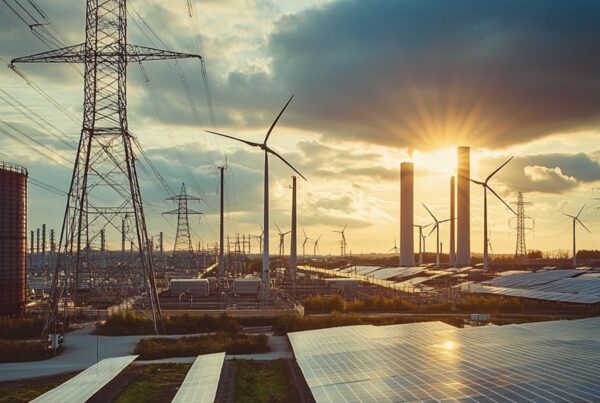
To reduce costs and the energy consumption associated with operations, businesses must actively examine their manufacturing systems and energy consumption, evaluate strategies for optimising current usage and explore renewable energy sources to minimize negative environmental impacts.
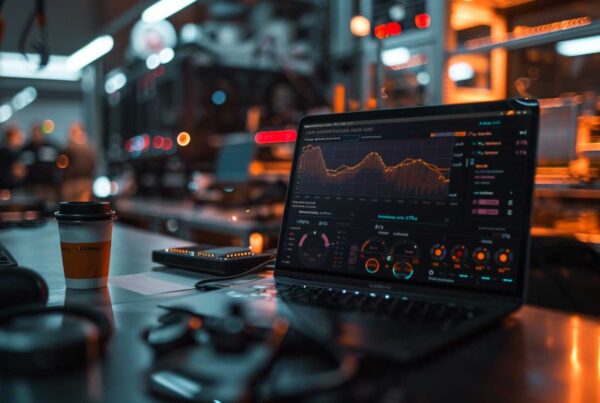
Moreover, the advancement of the industrial internet of things (IIoT) is granting manufacturing executives the opportunity to gain unprecedented operational insight from their supply chain, production lines and connected machines, including deep, structured data on energy consumption.
Manufacturers should consider incorporating technologies that conserve energy, such as the Industrial Internet of Things (IIoT) and data-driven energy management platforms, into their sustainable manufacturing efficiency strategies.
Make ESG a priority
Given the current economic climate and its effect on the entire value chain, it is imperative for manufacturers to focus on environmental improvement and lowering carbon emissions through sustainable manufacturing initiatives and sustainable activities throughout 2023.
This focus must be coupled with considerations as to the future of the industry, how consumer needs can be better met, and how most businesses can keep creating products while remaining competitive. Investing in manufacturing innovations and technology that facilitates meaningful progress towards environmental and business objectives will become even more widespread within companies as the year unfolds.
Integrating Environmental, Social and Corporate Governance (ESG) into profitable growth strategies is paramount. Manufacturers employing new technology to tackle the social and environmental repercussions of the industry, such as packaging, waste, water usage, and electricity usage, will be the industry’s vanguards of growth and long-term transformation.
Sustainable manufacturing operations reduce production costs
In the past, upon the creation of manufactured products and the subsequent product shipment to a customer, the information feedback loop would cease, and the potential for value-added customer buy in would vanish. This was a big enough problem for multinationals, but for medium sized enterprises and small businesses, it was a real obstacle to growth.
However, this has changed in recent times, as customers have come to expect novel digital experiences and more sustainable, low-consumption products. Courtesy of sustainable manufacturing innovation, companies are now able to remain involved in the product lifecycle far beyond the confines of the factory, improving operational efficiency in sustainable ways across a multitude of industry sectors.
Service initiatives for driving new customer experiences produce considerable potential for sustainable revenue generation. Monitoring and optimizing sustainability metrics throughout the service lifecycle can positively affect a manufacturer’s energy efficiency and income while mitigating negative environmental impacts.
For example, industrial machinery has a finite lifespan. By applying data-driven insights, manufacturers and their customers can take a proactive approach to decommissioning, disposal, and recycling of manufactured products when they reach the end of their operational cycle. Proactive servicing also lengthens the lifespan of the product, eliminating the need for the customer to make repeat purchases with the subsequent reduction in waste, delivering multiple environmental benefits.
Speak To Red Hawk Today
With such a range of pathways to sustainable manufacturing available, choosing the right one for your business can feel overwhelming.
Speak to Red Hawk today, and our expert consultants will guide you towards solutions and manufacturing innovations that conserve energy, conserve resources, lower your bills and emissions, deliver real environmental improvements, and put you at the forefront of sustainable manufacturing.